Nine pre-owned Rolex picks: our March 2026 guide
Nine Rolex references from our March 2026 shortlist. Original price commentary is dated; follow listings for current availability.
March 2026 guide, corrected: This is our historical nine-watch shortlist. Price figures are quotations from that guide, not current offers. Absolute durability and resale claims have been removed, and the Sky-Dweller bracelet comparison corrected. Listing pages show current availability.
This shortlist spans travel watches, divers, chronographs and simple everyday models. We selected different sizes and generations so that buyers could compare the functions, design and wearing experience they prefer. The price figures below preserve the March guide’s context; compare current examples before making a purchase.
1. Rolex GMT-Master II "Batman" 126710BLNR
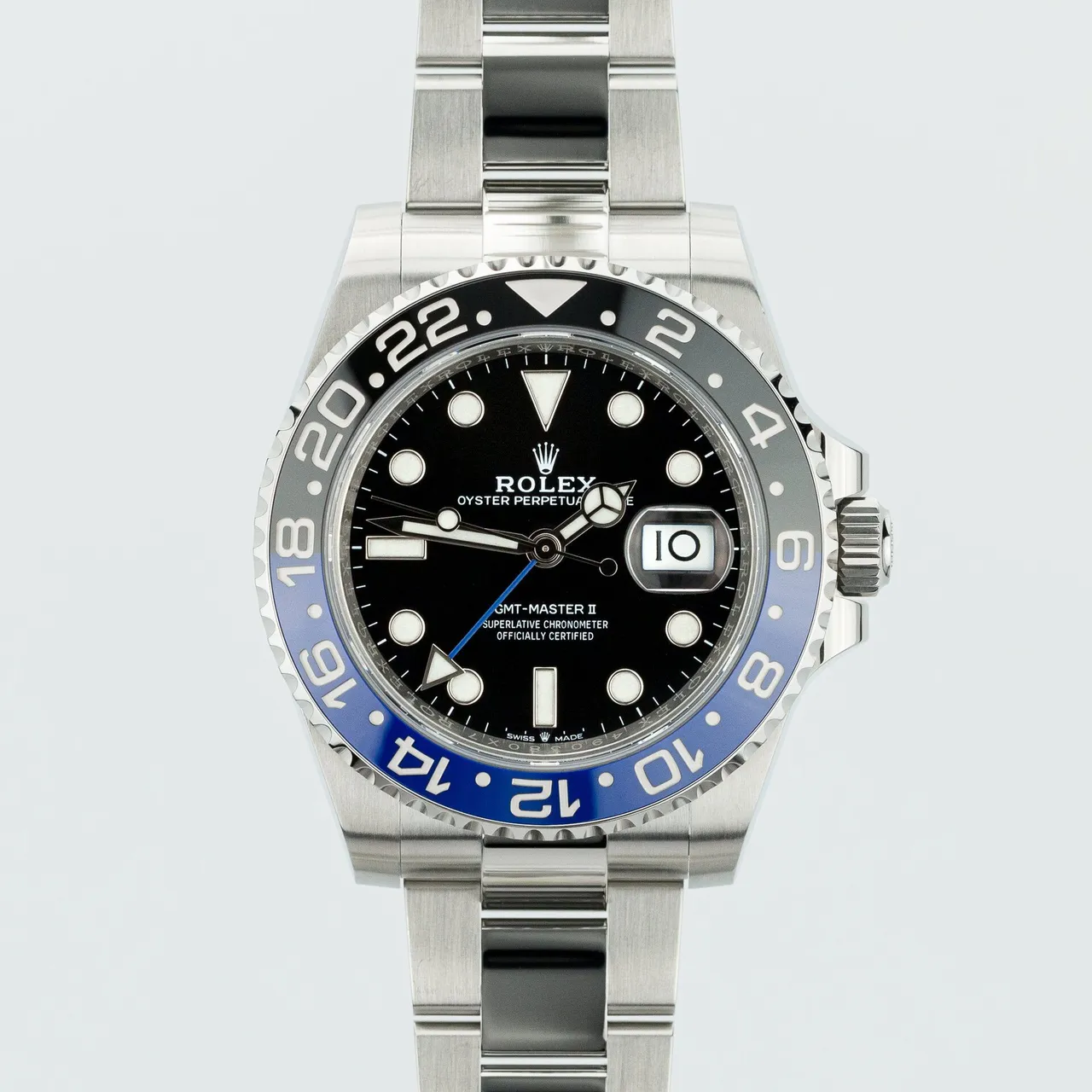
The blue-and-black GMT-Master II was our travel-watch pick for buyers who preferred a darker bezel to the red-and-blue Pepsi. Production rumors were part of the March discussion, but they did not establish a purchase deadline or future price.
The black and blue Cerachrom bezel reads differently than the Pepsi. It's darker, more versatile, more suited to business wear. On the Oyster bracelet, it has a tool-watch presence that the Jubilee version softens.
| Specification | Detail |
|---|---|
| Case | 40mm |
| Caliber | 3285 · 70h power reserve |
| Water resistance | 100m |
| Bezel | Black/blue Cerachrom · bidirectional |
| March guide retail quote | ~€11,350 |
| March guide asking range | €13,500–€16,000 |
Why consider it: A blue-and-black travel watch with a distinct look on Oyster or Jubilee. Compare actual bracelet configurations.
The catch: Compare the asking price with other examples of the same reference and bracelet; condition and accessories affect the comparison.
Example listing: Rolex GMT-Master II Batman on Oyster — view listing and current availability
2. Rolex Submariner Date 126610LN
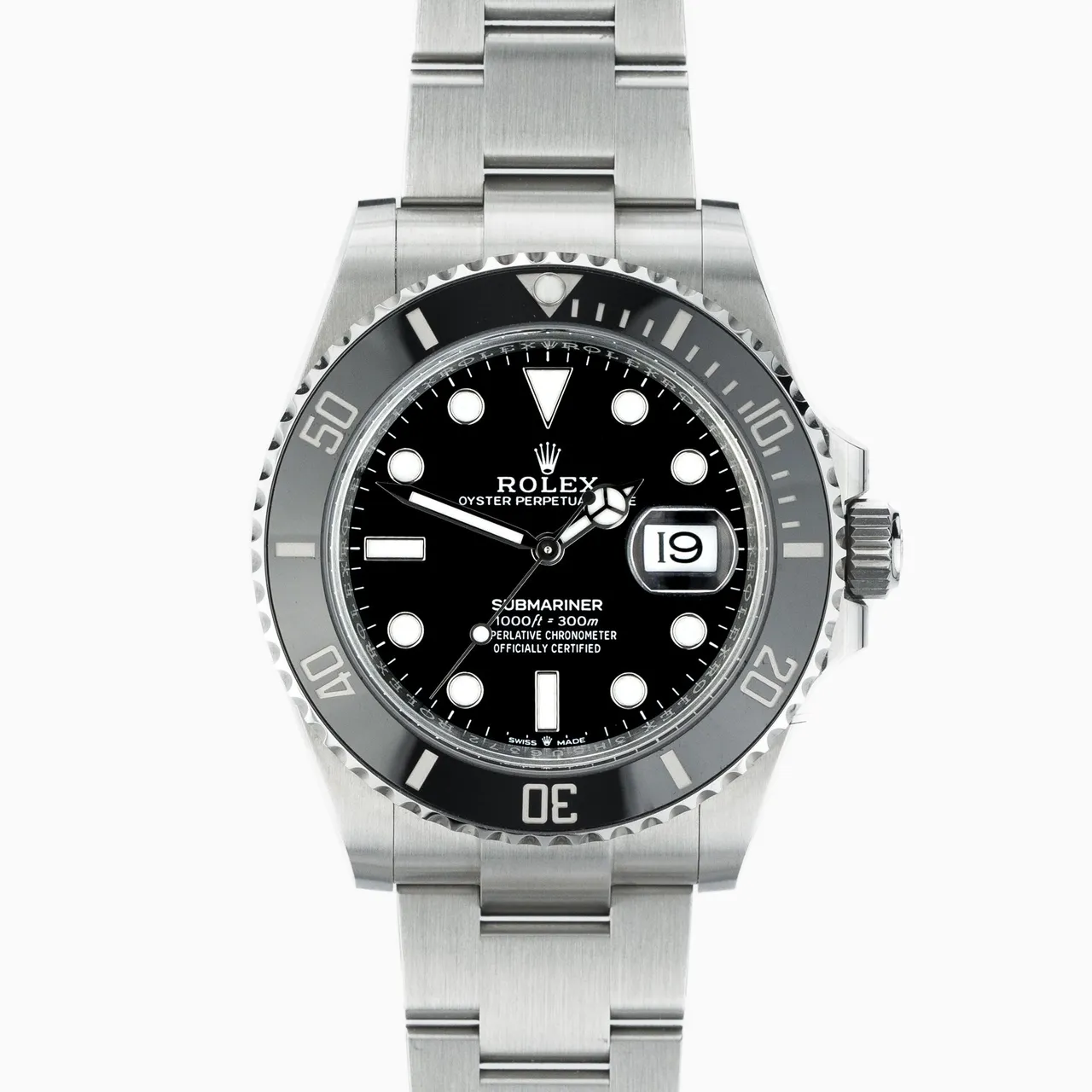
The Submariner Date doesn't need a sales pitch. It's the most recognized dive watch ever made, and the 126610LN is the current-production version with Rolex's updated 41mm case and Cal. 3235 movement.
For a 126610LN, compare examples of the same reference and check the year, condition and included accessories. A similar-looking Submariner from an earlier generation may have different specifications.
| Specification | Detail |
|---|---|
| Case | 41mm |
| Caliber | 3235 · 70h power reserve |
| Water resistance | 300m |
| Bezel | Black Cerachrom · unidirectional |
| March guide retail quote | €11,100 |
| March guide asking range | €11,000–€12,500 |
Why consider it: A familiar dive-watch design with a date display and a 41mm case.
The catch: Buy it for the design and fit; resale value and the time needed to sell remain uncertain.
Example listing: Rolex Submariner Date 126610LN — view listing and current availability
3. Rolex Cosmograph Daytona "Zenith" 16523
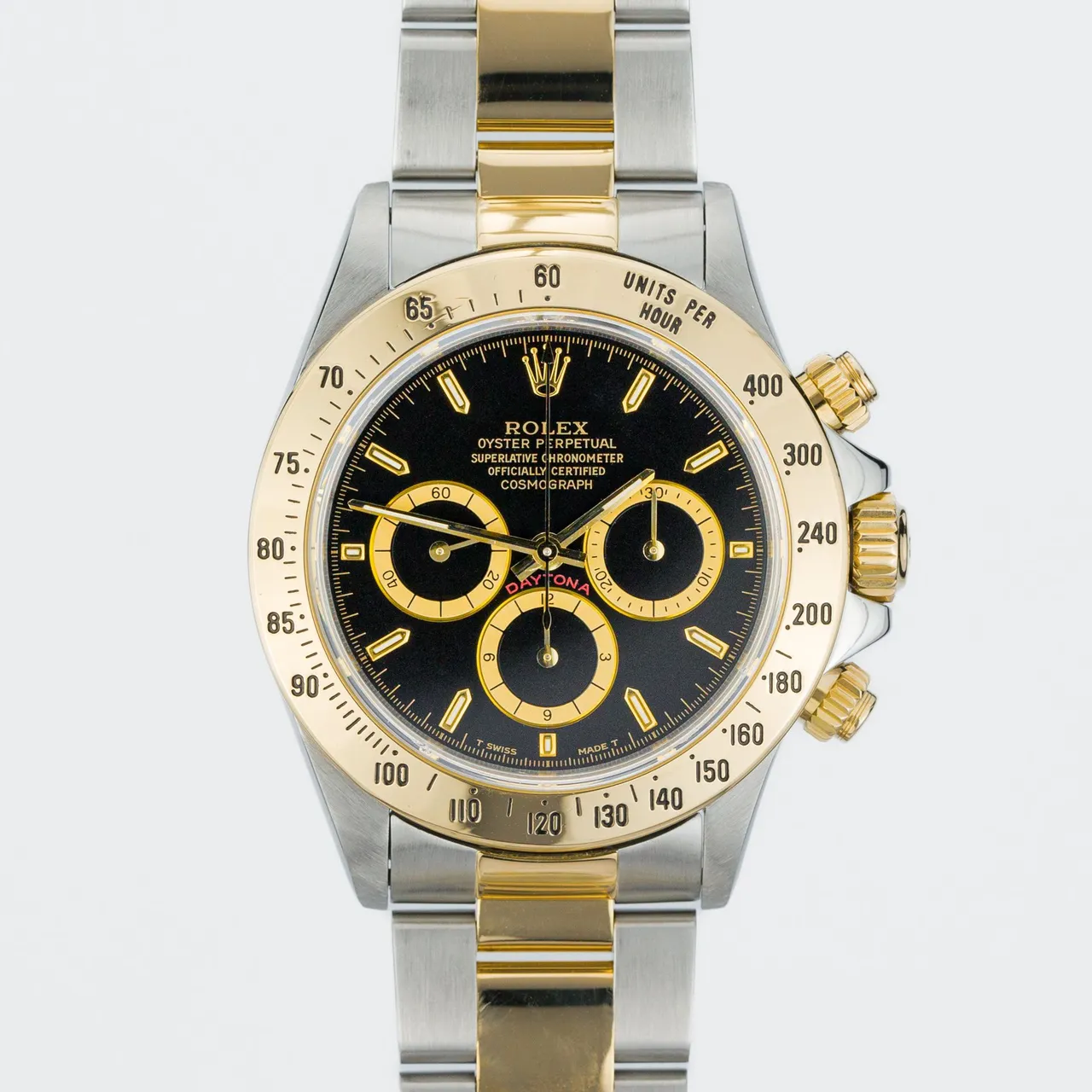
This is the contrarian pick. While everyone chases the modern ceramic Daytona, the Zenith-era references from 1988 to 2000 remain some of the most compelling vintage Rolex buys.
The 16523 is the two-tone (steel and gold) version powered by the Zenith El Primero movement — the same caliber that Rolex modified and used before developing their in-house 4130. Our example is from 1989 and features the "inverted 6" dial, a small production variant that collectors notice.
The two-tone 16523 and steel 16520 offer different materials and looks within the Zenith-era Daytona family. Compare condition, dial details and documentation before deciding how much either example is worth to you.
| Specification | Detail |
|---|---|
| Case | 40mm |
| Caliber | 4030 · modified Zenith El Primero |
| Water resistance | 100m |
| Bezel | Gold tachymeter |
| Year | 1989 |
| March guide asking range | €16,000–€22,000 |
Why consider it: A two-tone Daytona from the Zenith movement era, with dial details that merit close inspection.
The catch: Ask for service information and a current estimate for any necessary work; vintage-specific parts can affect maintenance.
Example listing: Rolex Daytona Zenith "Inverted 6" 16523 — view listing and current availability
4. Rolex Cosmograph Daytona 126500LN
The 126500LN is our modern chronograph comparison. The table retains the retail and pre-owned figures quoted in March; it is not a current valuation or proof of a market-wide price floor.
When comparing dealer listings with an authorized-dealer purchase, ask about actual availability and the total price. Waiting times and allocations vary.
The 126500LN uses Cal. 4131 with a 72-hour power reserve and Rolex’s Chronergy escapement. Its ceramic Cerachrom bezel is highly scratch-resistant; Rolex describes the material’s scratch and colour resistance, which does not make the watch indestructible.
| Specification | Detail |
|---|---|
| Case | 40mm |
| Caliber | 4131 · 72h power reserve |
| Water resistance | 100m |
| Bezel | Black Cerachrom tachymeter |
| March guide retail quote | €16,550 |
| March guide asking range | €28,000–€32,000 |
Why consider it: A modern Daytona for buyers who prefer the current-generation movement and ceramic-bezel design.
The catch: Set a budget for the particular watch rather than treating a gap from a historical retail price as proof of value.
5. Rolex Sky-Dweller Blue Dial 326934
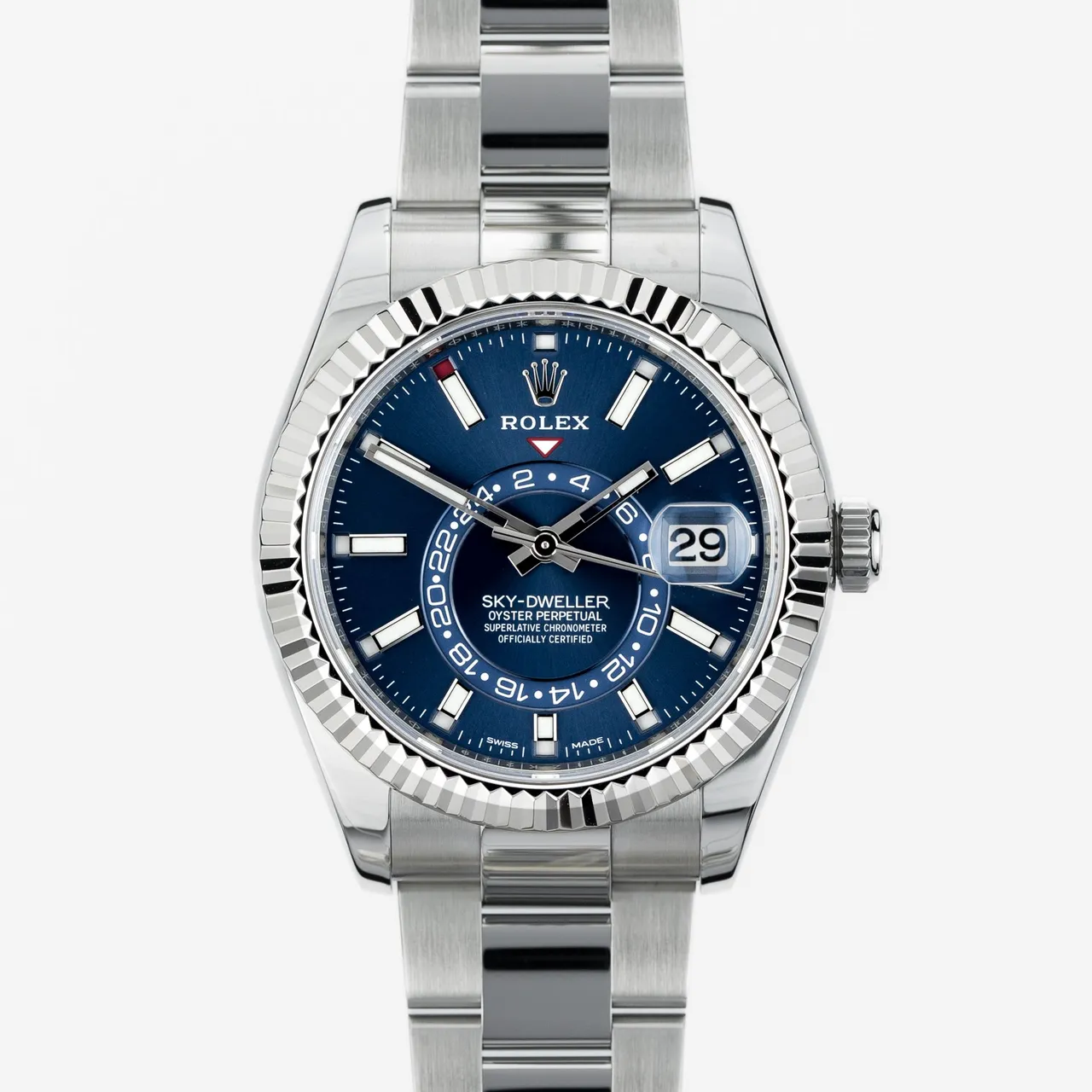
The Sky-Dweller might be the most underappreciated watch in Rolex's current lineup. It packs an annual calendar and a second time zone into a 42mm case, making it Rolex's most complicated production watch. And on the secondary market, you can find steel examples for prices that don't reflect how much engineering is inside.
The blue dial on the 326934 is one of those Rolex dials that photographs differently than it looks in person. In direct light it runs deep navy. Under office lighting it shifts to a brighter, almost electric blue. It's a lot of dial presence for a Rolex.
The later 336934 uses Cal. 9002, while the 326934 in this guide uses Cal. 9001. Compare the exact reference, bracelet and condition rather than treating a generation change as proof of a price advantage.
| Specification | Detail |
|---|---|
| Case | 42mm |
| Caliber | 9001 · 72h power reserve |
| Water resistance | 100m |
| Complications | Annual calendar · dual time zone |
| March guide retail quote (new gen) | ~€16,700 |
| March guide asking range (326934) | €15,000–€19,000 |
Why consider it: Annual-calendar and dual-time functions in a previous-generation reference. Compare the exact example with later versions.
The catch: The 42mm case can wear large. Easylink is not exclusive to Jubilee: Rolex describes it on both Oyster and Jubilee Sky-Dweller bracelets. Check the configuration and fit of the individual example.
Example listing: Rolex Sky-Dweller Blue 326934 — view listing and current availability
6. Rolex GMT-Master II "Pepsi" 126710BLRO
The Pepsi’s red-and-blue bezel is the main visual contrast with the Batman above. Reports about production status were circulating when this guide was written; a rumor is not manufacturer confirmation.
For a purchase, compare the exact bracelet configuration, condition and accessories. Choose the colour combination you prefer rather than making a decision around a predicted discontinuation.
| Specification | Detail |
|---|---|
| Case | 40mm |
| Caliber | 3285 · 70h power reserve |
| Water resistance | 100m |
| Bezel | Red/blue Cerachrom |
| March guide retail quote | ~€11,350 |
| March guide asking range | €16,000–€19,000 |
Why consider it: The red-and-blue bezel and GMT functions, if that is the combination you want to wear.
The catch: Production rumors can change. Compare the watch on its own merits and price.
7. Rolex Oyster Perpetual 39mm 114300
The discontinued OP 39 is a sleeper. When Rolex dropped it in favor of the 41mm ref. 124300 in 2020, most people shrugged. Five years later, the 39mm size is getting rediscovered as the market swings back toward smaller, more refined watches.
Our dark rhodium dial example is particularly interesting. The 114300 with the rhodium dial was produced for a relatively short window, and it has a restrained elegance that the bright-colored 41mm OPs (the Tiffany blue, the coral red) don't attempt.
The 114300’s appeal here is its 39mm proportions and restrained dark rhodium dial. Comparisons with other Oyster Perpetual sizes or colours do not establish a future return for this reference.
| Specification | Detail |
|---|---|
| Case | 39mm |
| Caliber | 3132 |
| Water resistance | 100m |
| Dial | Dark rhodium |
| Status | Discontinued (2020) |
| March guide asking range | €6,500–€8,500 |
Why consider it: A 39mm time-only Rolex with a restrained dial and proportions distinct from the later sizes.
The catch: No date or additional complications; the appeal lies in the proportions and dial.
Example listing: Rolex Oyster Perpetual 39 Dark Rhodium — view listing and current availability
8. Rolex Explorer 36mm 124270
The Explorer is Rolex's argument that less is more. 36mm, no date, no rotating bezel, just a dial you can read in the dark and a case that disappears under a shirt cuff. The 124270 brought the Explorer back to its original 36mm size after years at 39mm, and the market responded.
Pre-owned prices hover close to retail. That might sound unappealing, but consider: the Explorer is one of the few Rolex sports models where the secondary market isn't charging a wild premium. You get a modern Rolex with the Cal. 3230 and 70-hour power reserve at something approaching a fair price.
The 36mm Explorer is a compact option for everyday wear. Try the size and bracelet fit on your own wrist; no case size suits everyone.
| Specification | Detail |
|---|---|
| Case | 36mm |
| Caliber | 3230 · 70h power reserve |
| Water resistance | 100m |
| Dial | Black · chromalight indices |
| March guide retail quote | ~€7,500 |
| March guide asking range | €7,500–€9,000 |
Why consider it: A compact 36mm case and clear time-only dial for daily wear.
The catch: Buyers who prefer a larger case or a date display may find another reference more suitable.
Example listing: Rolex Explorer 36mm 124270 — view listing and current availability
9. Rolex Submariner "Hulk" 116610LV
The 116610LV combines a green dial and green bezel, while the later 126610LV pairs a black dial with a green bezel. That design difference is the reason to compare them; discontinuation alone does not make either watch a safe financial purchase.
The Hulk is different from the Starbucks in ways that matter to collectors. The older reference has a sunburst green dial (the Starbucks has a black dial with green bezel). That all-green combination was unique in the Submariner lineup and hasn't been repeated. Rolex has never made a full green-on-green Sub before or since.
| Specification | Detail |
|---|---|
| Case | 40mm |
| Caliber | 3135 |
| Water resistance | 300m |
| Bezel | Green Cerachrom · unidirectional |
| Status | Discontinued (2020) |
| March guide asking range | €16,000–€19,000 |
Why consider it: The green dial and bezel combination, rather than an assumption about future prices.
The catch: Compare condition, accessories and the specific green dial you prefer against other Submariner options.
How we chose these watches
The shortlist compares travel functions, dive-watch designs, chronographs and time-only watches across different sizes and generations. For an individual purchase, focus on:
- Reference and specification: Compare the same reference and bracelet configuration.
- Condition and service information: Read the description and ask about disclosed work or replacement parts.
- Wearability: Check case size, bracelet fit and the functions you use.
- Price and ownership costs: Compare current examples and allow for shipping and maintenance.
- Documentation and accessories: Establish exactly what accompanies the watch.
FAQ
Is buying a pre-owned Rolex a good investment? There is no guaranteed return. Prices can rise or fall, and resale involves transaction costs and uncertain timing. Choose a watch you want to wear within a budget you are comfortable with.
Is a pre-owned Rolex cheaper than retail? It depends on the reference and individual example. Compare current asking prices with the relevant current retail model, allowing for differences in generation, condition and accessories. The figures in this article are historical quotations.
What should I check before buying a pre-owned Rolex? Confirm the exact reference, condition, included accessories and service information. Ask about disclosed replacement parts and the seller’s inspection process. A box or warranty card alone does not establish a watch’s authenticity.
Will Rolex prices keep rising? Future retail changes and pre-owned values are uncertain. A past increase or a discontinued reference does not guarantee that the next buyer will pay more.
Related guides: