You can now bet on Rolex prices. Here's what a dealer thinks.
Kalshi and Bezel launched prediction market contracts on luxury watch prices. You can now bet on whether the Rolex GMT-Master II Pepsi will exceed a price target. Here's what it means for dealers.
As of Monday, you can go on Kalshi and bet on whether the Rolex GMT-Master II Pepsi will trade above a certain price by a certain date.
Kalshi is the CFTC-regulated prediction market that already lets Americans wager on elections, sneaker prices, and Pokémon card values. Now, in partnership with Bezel (a luxury watch marketplace backed by Kevin Hart and J Balvin), they've launched "Watch Futures": event contracts tied to luxury watch prices. Bloomberg broke the story. The minimum bet is a dollar.
We sell watches for a living, and we have some thoughts.
How it works
You're not buying a watch. You're buying a contract that pays out based on whether a price target is hit by a specific date. It's a yes/no bet: "Will the Rolex GMT-Master II Pepsi exceed $X by June 2026?" Pick your side. If you're right, you get paid.
The pricing data comes from Beztimate, Bezel's proprietary valuation engine. Multiple independent models crunch real-time bids, offers, and verified sales from Bezel's marketplace until they reach what the company calls a "mathematical consensus" on fair market value. Not one algorithm. Several of them arguing until they agree.
You'll find the contracts on Kalshi's app under "Culture," next to sneaker and Pokémon card markets.
Why this was inevitable
Prediction markets are booming. Kalshi processed $9.8 billion in trades in February alone. Polymarket saw nearly $530 million flow through Iranian strike contracts over a single weekend. ICE, the NYSE's parent company, took a $2 billion stake in Polymarket. These platforms are pulling in institutional money, and they need new asset classes to trade.
The watch world, meanwhile, has spent years trying to prove itself as a legitimate alternative investment. WatchCharts tracks price indices. Chrono24 publishes market reports. Bezel's own 2025 report showed a 38% rejection rate on submitted watches, signaling a secondary market that's tightening, with prices hardening around quality references.
The infrastructure and the audience were already there. Kalshi just built the product.
What a dealer actually thinks about this
Here's what most of the coverage misses: dealers already bet on watch prices. That's literally what buying inventory is.
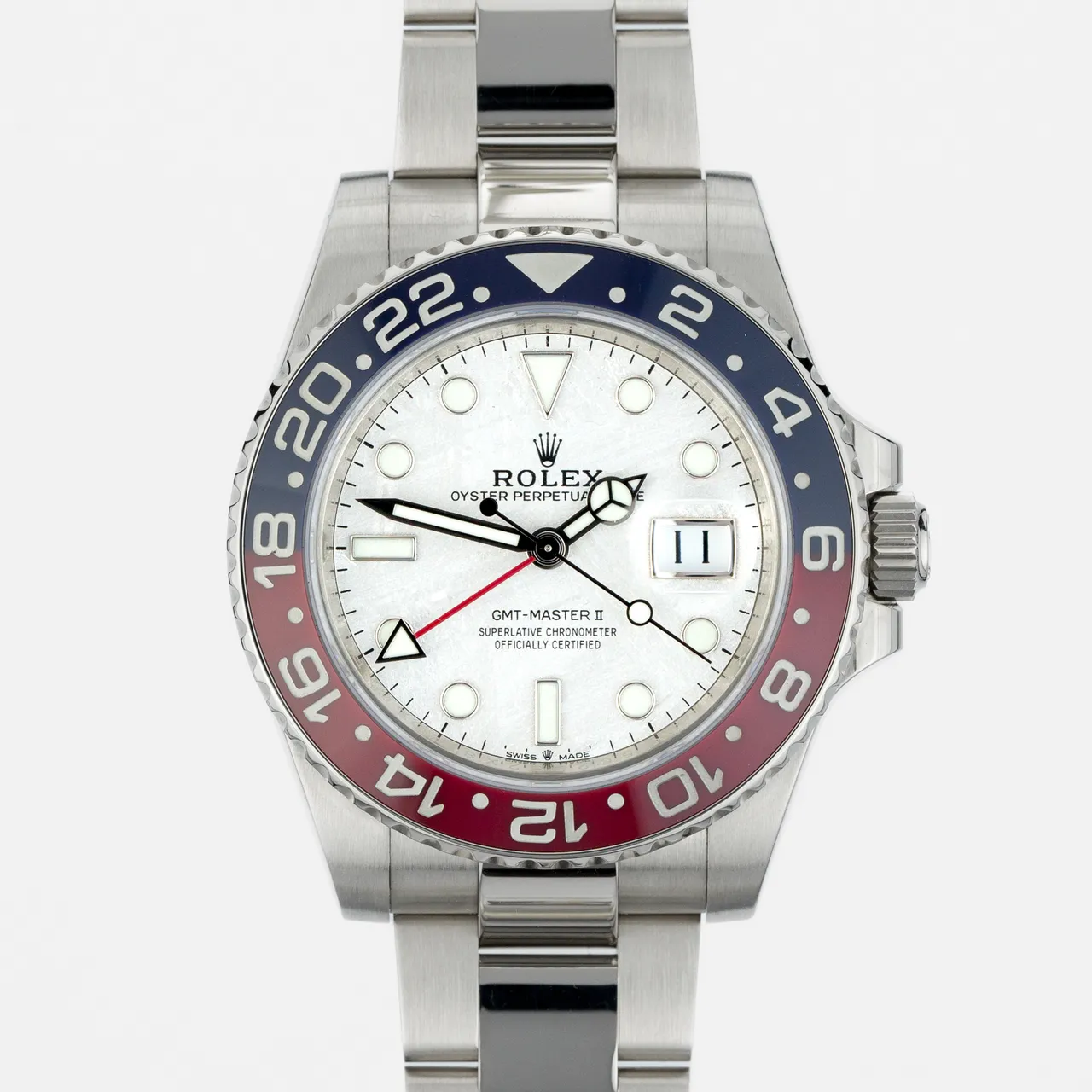
Every watch sitting in our collection represents a bet that it'll sell for more than we paid. When we buy a Rolex GMT-Master II Pepsi Meteorite, we're expressing a view on future demand for white gold GMTs with meteorite dials. When we stock five different Submariner references, we're betting the Sub stays the blue-chip of the watch world.
Kalshi formalized what we do every day. The difference: on Kalshi, you don't need $15,000 to express that view. You need a dollar.
That's interesting. It's also a little uncomfortable.
The data problem
Beztimate pulls from Bezel's marketplace, and Bezel is US-focused. That matters, because the pre-owned watch market isn't one market. It's dozens of regional markets with different pricing dynamics.
A Rolex Submariner Date "Bluesy" in Europe trades differently than the same reference in New York or Tokyo. Currency fluctuations, tariffs, VAT structures, regional demand. We've written about how tariff policy directly moves watch prices. A prediction contract built on US-centric data doesn't capture the full picture.
Not a dealbreaker for Kalshi. They're serving US bettors, so US data makes sense. But anyone using these contracts as a signal for global market direction should factor in that blind spot.
Could betting change actual prices?
If enough money flows into "Rolex Daytona will exceed $40K" contracts, does that create a self-fulfilling prophecy? Does bullish sentiment on Kalshi translate into actual buying pressure on the secondary market?
Probably not yet. The watch prediction market is too small relative to the actual market. But the mechanism exists in theory. And when prediction markets graduate from fringe to institutional, as they already have in politics, the tail can start wagging the dog.
There's also the insider knowledge problem. Authorized dealer allocation insiders, brand employees with advance knowledge of discontinuations, big dealers with order flow visibility. These people know things retail bettors don't. Kalshi's contracts on Rolex discontinuations (the GMT Pepsi discontinuation is literally a contract you can bet on) could attract people with asymmetric information. That's not illegal the way insider trading is illegal in equity markets. But it's a dynamic worth understanding before you put money down.
The hedging angle no one is talking about

This is where it gets interesting for our side of the business. A dealer sitting on $500K in Rolex inventory could theoretically buy "no" contracts on price targets for those references. If the market drops, the contracts pay out and offset some of the inventory loss.
That's hedging. Commodity traders and farmers have done it for centuries with futures contracts. A watch dealer hedging inventory through prediction market contracts would be new, but the underlying logic is centuries old.
We're not doing this. The liquidity on these contracts probably isn't there yet, and the contract specifications would need to match our actual exposure more precisely. But the concept is sound. If the market grows, someone will try it.
What this means for you
If you collect watches because you love them, this changes nothing. Your GMT Batman doesn't care about prediction market contracts. Wear what you love.
If you think of watches as investments, Kalshi gives you a new tool. Want to bet the vintage Daytona market keeps climbing without tying up $30K? Now you can, for a dollar.
And if you're a dealer, pay attention. Not because you need to rush to Kalshi's platform, but because prediction market data could become another pricing signal in the secondary market. When Bloomberg starts covering watch betting contracts, the "watches as an asset class" argument picked up a new data point.
The watch market has been financializing for years. Kalshi and Bezel just made it a lot more visible.